
Guides
Curtain Wall Aluminium Profiles: A Specification Guide
A curtain wall is bought as a set of profiles before it is bought as a facade. The mullion carries the wind, the transom carries the glass, the cover cap closes the sight line, and the gasket with the break decides whether the assembly seals and insulates. Get the profile set right and the facade follows. Get it wrong and no amount of site adjustment rescues the elevation. This guide covers the members, the values to fix and the questions for a profile supplier.
The members in the set
A stick system needs four families: a mullion, a transom, a pressure plate or cover cap, and the gasket. Add a thermal break where the wall separates conditioned space from outside, and a drainage path at every horizontal. Each member is its own die, so the set is designed together. Ask for a schedule of sections rather than one representative detail, because the head, the sill and the corners are where a facade leaks.
Depth against wind and span
Mullion depth is chosen against the wind load and the span between floors, not against the glass. A deeper mullion resists deflection across a tall module, and the limit is set by how far the assembly may move before the glass edge is stressed. Ask for the deflection the section is designed to, then check the module height against it. A section that looks heavy in a photograph proves nothing at all.
Wall thickness, tolerance and the die
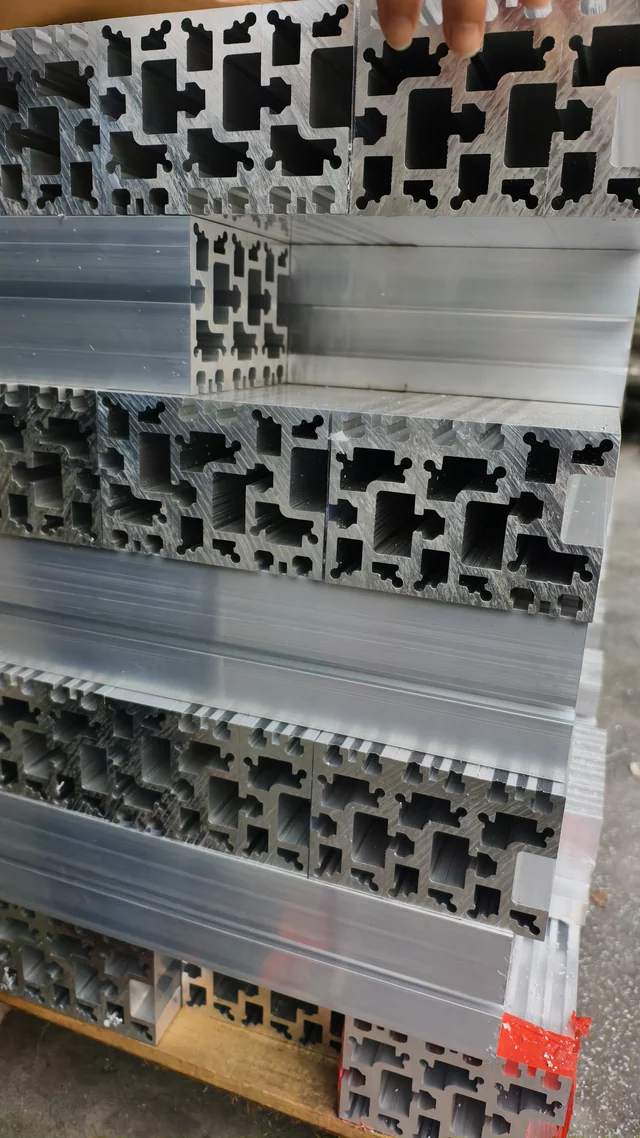
Wall thickness is what a fabricator measures on arrival, so write it per member. The range is extruded in 6063-T5 primary aluminium, and tolerance on the section belongs in the enquiry as a value rather than an assumption. A custom die is worth considering where a module repeats, since the profile can then carry the drainage and the fixing the elevation actually needs. Ask for the die drawing before the order.
Drainage, gaskets and the glazing line
Water gets in; the design has to let it out. A curtain wall drains at each horizontal through a path that stays open after the glass is set, and EPDM foam gaskets compress along the rebate to hold wind-driven rain out of the line. The glazing line fixes the maximum unit thickness, so the glass is chosen before the bead. Check that setting blocks do not sit across a drainage channel.
Buying profiles rather than finished windows
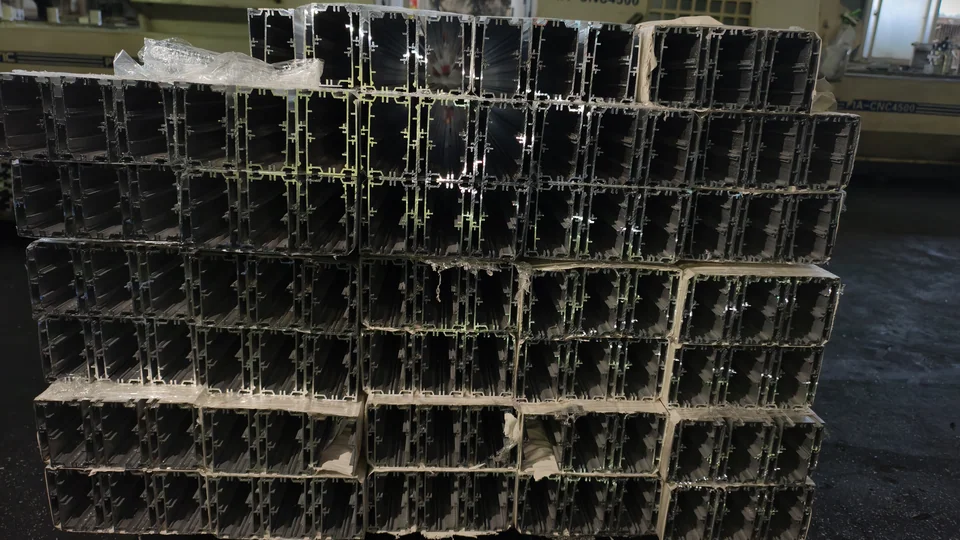
A profile order is a different document from a window order. It needs cut lengths, mitre or crimp details, the finish, and packing that protects a long length in a container. Adam Alux supplies profiles with the dimensional pack as a PDF and CAD on request, and a sample section can be reviewed before a die run. Ask as well for the bundle length and weight, because a container carries long profiles differently from finished windows. Lead time is confirmed with the quotation.
FAQ
Frequently asked
What profiles make up a curtain wall?
A mullion, a transom, a pressure plate or cover cap, and the gasket that seals the glass, with a thermal break where the wall separates conditioned space from outside. Each is a separate die, and the set is designed together, since the head, the sill and the corners decide whether the facade drains.
How deep should a curtain wall mullion be?
Deep enough to hold deflection across the module at the project wind load and the floor-to-floor span. There is no universal depth, because the limit follows the span and the glass edge. Ask the supplier for the deflection the section is designed to, then check it against the tallest module on the elevation.
Does a thermal break belong in a curtain wall?
Where the wall separates air conditioned space from outside, yes, because the mullion is a straight path for heat and a cold inner face collects condensation. The break is a non-metal strip between the shells. Read it on the section, and check that it runs past the glazing line and around the corners.
What should a profile enquiry contain?
The module sizes, the floor height, the wind load, the glazing build-up, the finish and the alloy, with wall thickness stated per member. Add the die drawing where one exists. Adam Alux answers with the dimensional pack as a PDF, CAD on request, and a sample section before a die run.
Can profiles be supplied without the glass?
Yes. Profiles ship as cut lengths or as a set with the gaskets, and the glazing is bought against the line. The pack states the glazing line and cavity, so a local glazier can set the unit. Finish, packing and cut lengths are quoted together, and lead time is confirmed with the quotation.
Send your opening schedule
Series, glazing and finish come back as one quotation, with the full dimensional pack on PDF and CAD on request.